Today cars are designed by hundreds of people working only with computer design tools, but in 1957 Sir Alec Issigonis with a design team of eight set out with pen and paper to design one of the worlds most loveable cars. Instructed by BMC to design an affordable car which could safely seat four adults and that used very little petrol and be economical to build. The Mini was BMC’s answer to the VW Beetle and was just as innovative.
Issigonis decided this new car would have to use the existing Morris Minor A series engine to save design cost, but to conserve space he placed the engine transversely driving the front wheels, this was a radical design at the time but this allowed a very short bonnet and gave more interior space. other innovations incorporated into the mini include rubber cone independent suspension, rack and pinion steering and a monocoque body that eliminated the need for a costly separate chassis.
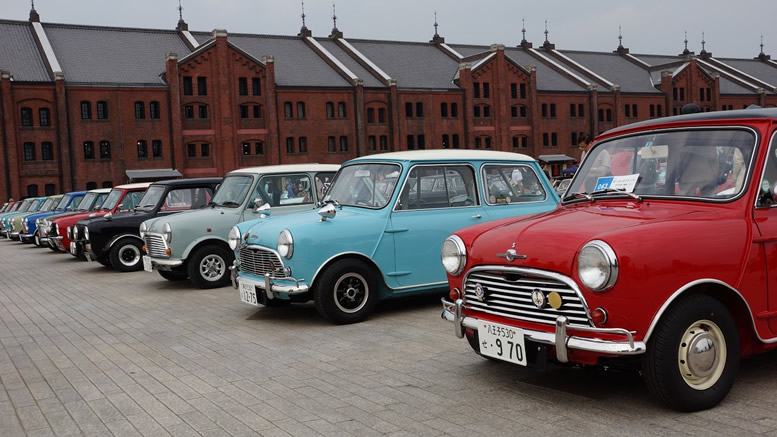
When the Austin 7 and Morris Mini was released in August 1959 the Mini became very popular as they were cheap, easy to drive around the town and very cute. In 1961 racing legend John Cooper got his hands on the Mini and transformed it into a rally winning sports sedan. BMC stuck the Cooper name on the Mini with his modifications and had a rally and sales winner too. The Mini showed great success during the 60’s and had very few changes but with a dip in sales in the late 60’s, BMC now known as British Leyland decided to give the Mini a face lift for 1970 and introduced the Clubman. Gone were the cute lights and grill for a flat bonnet and square grill which made the mini look like any of the new Japanese imports that were on the market during this time. The Clubman did not catch the hearts of the buying public and was dropped in 1979.
The late 70s were a bad time for Leyland and after much company restructuring in 1980, the classic Mini is now known as an Austin Mini. Several improvements were made during the 80’s and sales improved, the Cooper was back after a nine year retirement and the Mini’s cult status increases.
In 1988 a once again restructured company also changes its name again, to Rover Group. It showed improved sales during the 90s and even had exports to Japan. The Rover Group was in serious financial trouble by this stage and was sold to German carmaker BMW in 1994. The once large British auto maker had only Mini and Land Rover to call its own with the Rover brand being little more than a Honda rebadge.
BMW saw the potential in Land Rover and the name Mini, it also planned to redevelop the Rover brand as an entry level to the BMW series. Although BMW did put the Rover line of cars back on track, their investment was not getting a good return and with a totally new retro Mini in the design studio, BMW decides to sell Rover to a British consortium, Land Rover to Ford and keep Mini for themselves, this marked the end of the original Mini. The last Mini rolled off the production line on the 14th of September 2000 at 40 years of age it featured improvements like air conditioning, drivers airbag and electric windows. In contrast the first Mini did not have face airvents and the side windows were split and had to be slid by hand.
Quick Mini Facts
The Mini was one of the first cars to popularize the use of the universal joint in the drive train, it was previously used in submarine control gear.
During the painting of the shell, a rod would be inserted straight through the car. This allowed the shell to be spun round so both the top and bottom could be easily painted. The speedometer was originally put is in the middle of the dashboard, covering the hole where the pole went.
The Mini van (which was longer than the sedan) featured split rear doors, only so it could fit in the same production line as the sedan.